
Taming the Greedy Monkey: Mastering Self-Gratification
Charlie Panayi • July 24, 2024

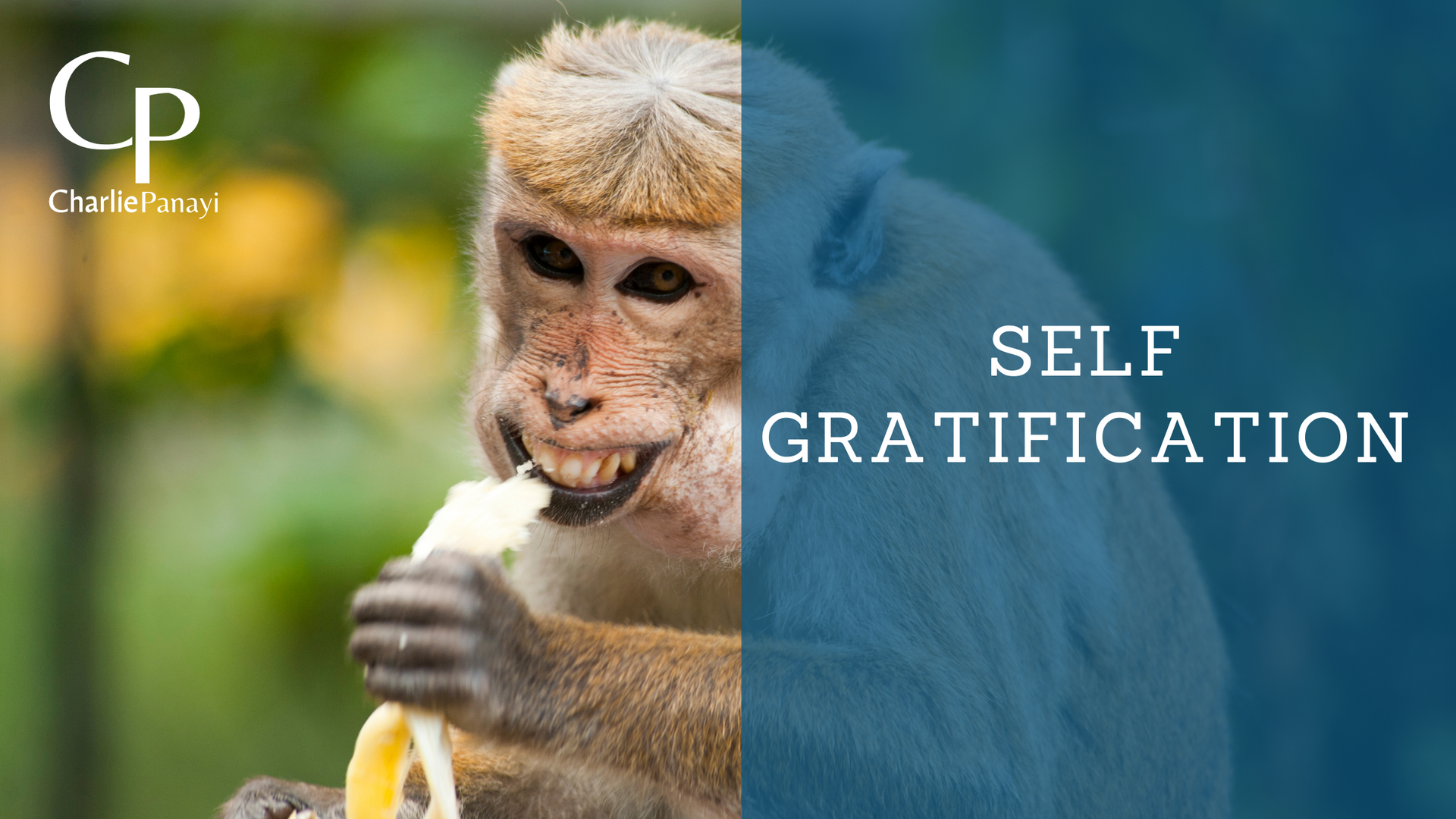
In the age of instant gratification, it’s all too easy to go for quick pleasures. Whether it’s reaching for a doughnut instead of a healthier snack, binge-watching your favorite show instead of hitting the gym, or scrolling through social media instead of working on that important project, the "greedy monkey" in our minds always tempts us to prioritise short-term desires over long-term success.


But what if we could tame this greedy monkey and harness our impulses for greater personal growth and fulfillment? Let's explore the concept of self-gratification and I'll offer some practical skills to gain self-control.

Understanding the Greedy Monkey

The "greedy monkey" is a metaphor for our impulse-driven nature. It symbolises the part of our brain that seeks immediate pleasure and avoids discomfort. This aspect of our psyche can be helpful in certain situations, such as recognising danger or enjoying life's simple pleasures. However, when left unchecked, it can hinder our ability to achieve our long-term goals.


Why Do We Seek Instant Gratification?

  • Biological Wiring: Our brains are wired to seek pleasure and avoid pain. Dopamine, the feel-good neurotransmitter, is released when we experience something enjoyable, reinforcing behaviors that provide immediate rewards.
  • Societal Influence: We live in a world where everything is available at our fingertips. From lending/credit cards to online shopping, the culture of convenience encourages instant gratification.
  • Stress and Emotional Triggers: When we're stressed, anxious, or upset, we often turn to quick fixes that make us feel better temporarily, whether it's comfort food or mindless entertainment.


The Consequences of Instant Gratification

While indulging in instant gratification might provide temporary relief, it often leads to negative consequences in the long run:

  1. Lack of Progress: When we prioritise short-term pleasures over long-term goals, we hinder our personal and professional development.
  2. Decreased Self-Esteem: Consistently giving in to impulses can lead to feelings of guilt, shame, and low self-worth.
  3. Poor Health: Choosing immediate gratification over healthier options can lead to physical health issues, such as obesity or addiction.
  4. Strained Relationships: Neglecting responsibilities or failing to meet commitments can damage our relationships with others.


Tips on Overcoming the Greedy Monkey

The good news is that self-control is a skill that can be developed with practice and intention. Here are some strategies to help you overcome the greedy monkey and control self-gratification:


1. Mindful Awareness

Being mindful means paying attention to the present moment without judgment. By practicing mindfulness, you can become more aware of your impulses and make conscious choices that align with your long-term goals.

  • Practice Meditation: Spend a few minutes each day meditating to increase self-awareness and reduce impulsive behavior.
  • Recognise Triggers: Identify the situations, emotions, or environments that trigger your impulse-driven behavior, and develop strategies to cope with them.
  • Pause and Reflect: Before acting on an impulse, take a moment to pause...count to 10 and ask yourself if it aligns with your long-term objectives.

2. Set Clear Goals

Having clear, well-defined goals can help you stay focused and resist distractions. When your objectives are in sharp focus, it's easier to prioritise long-term success over short-term gratification.

  • Write Down Your Goals: Clearly define your long-term and short-term goals and keep them visible to remind yourself of your priorities.
  • Break Down Goals: Divide larger goals into smaller, manageable tasks to make them less overwhelming and more achievable.
  • Visualise Success: Regularly visualise yourself achieving your goals to reinforce your commitment and motivation. Do you have a vision board?


3. Delay Gratification

Delaying gratification is a powerful skill that involves postponing immediate rewards for greater future benefits. Practicing this skill can strengthen your self-control and resilience.

  • Start Small: Begin with small challenges, like waiting an extra five minutes before checking your phone, and gradually increase the difficulty.
  • Use Positive Reinforcement: Reward yourself for successfully delaying gratification to build positive associations with self-control.
  • Develop Patience: Practice patience in everyday situations to increase your ability to wait for more significant rewards.


4. Positive Reinforcement

Celebrating your achievements, no matter how small, can boost your confidence and reinforce positive behavior.

  • Acknowledge Your Efforts: Recognise your progress and accomplishments to maintain motivation and self-esteem.
  • Create a Reward System: Set up a system where you earn rewards for meeting specific goals or practicing self-control.
  • Surround Yourself with Positivity: Engage with people who support and inspire your journey toward self-improvement.


5. Surround Yourself with Supportive People

The people we surround ourselves with can significantly impact our behavior and mindset. A supportive environment can motivate and inspire you to stay on track.

  • Find Accountability Partners: Partner with friends or mentors who can hold you accountable and provide encouragement.
  • Join Supportive Communities: Engage with groups or communities that share similar goals and values, offering support and guidance. (I have a private community)
  • Learn from Role Models: Identify individuals who have mastered self-control and learn from their experiences and insights.


Conclusion

Overcoming the greedy monkey of self-gratification is not easy, but it is undoubtedly a rewarding one. By practicing the tools I've listed above you can help overcome it.


Remember, self-control is a skill that grows stronger with practice. Embrace the journey, celebrate your progress, and watch as you transform into the best version of yourself.


Suggested Reading

  • The Power of Habit by Charles Duhigg
  • Atomic Habits by James Clear

Call to Action

Join my community of like-minded individuals dedicated to personal growth and self-improvement. Share your journey, insights, and strategies.
By Charlie Panayi November 27, 2025
(aka: I tried not to rant… but here we are) Ok… I’ve taken the night so I don’t rant too much, but honestly? This Budget has left me scratching my head. I genuinely cannot understand the logic of it, and yet, with this government… I can. What we saw this week doesn’t support growth, it doesn’t encourage work and it definitely does not reward the people who actually build this country. Instead, it does the one thing you should never do in a fragile economy... It stifles ambition, punishes entrepreneurship and discourages anyone trying to get ahead. An d that’s the part that gets me, who is thinking this stuff up? With what logic? In what universe does any of this equal “growth”? Let’s break down exactly what they’ve done, in plain English with actual specifics... and by the way I give an optimistic view at the bottom... YES Fiscal Drag on Steroids (and nobody voted for this) The government has frozen tax thresholds for years into the future. What does that mean in real life? You get a small pay rise Or your business earns a bit more Or inflation pushes wages up (as it always does) A nd suddenly, you’re in a higher tax band. It’s a tax rise without them admitting it’s a tax rise...A stealth tax. Quiet. Sneaky. Effective. This affects: workers business owners company directors self-employed people Basically, anyone who earns anything from honest effort. And let’s be clear, this doesn’t hit “the rich.” This affects normal people . Attacks on Investment & Property (aka: why build anything here?) The Budget introduces: Dividend tax is rising by +2 percentage points From the next tax year: Basic rate dividend tax: 8.75% → 10.75% Higher rate dividend tax: 33.75% → 35.75% Additional rate dividend tax: 39.35% → approx. 41.35% So if you take money from your own company? You now pay more tax for doing so. Rental income & savings income tax is also rising by +2 percentage points Basic rate: 20% → 22% Higher rate: 40% → 42% Additional rate: 45% → 47% If you’re a landlord or you receive any savings interest? You now get taxed more, instantly reducing margins and profitability. A brand-new “mansion tax” on homes over £2m This starts in April 2028 : Properties £2m–£2.5m → £2,500/year surcharge Properties up to £5m+ → up to £7,500/year This is on top of normal council tax. Not instead of. On top of. The message is loud and clear: “Don’t bother investing here. Build your future somewhere else.” It’s unbelievable, if you want people to invest in housing, in businesses, in long-term growth...you don’t do this. Crushing small businesses and directors SMEs make up 99% of UK businesses. They employ the majority of the private sector. They are the backbone of this country. So what does the Budget do to help them? In fact, it does the opposite. Higher tax on dividends As above, 2 percentage points more across the board. This directly affects company directors who pay themselves through dividends, which is practically every SME director in the UK. Higher tax on property income This affects: landlords serviced accommodation operators small portfolio owners anyone who diversified into property to create security Threshold freezes Because income bands aren’t rising with inflation, more business owners will fall into: higher tax brackets higher corporation tax pain higher marginal deductions Less incentive to hire If profit is taxed more…and taking that profit out of your own company is also taxed more… Why would any business want to employ anyone or expand in that manner? This then directly affects employment and opportunity for those wanting. And the consequence? People are leaving. In droves. This is already happening. Hundreds of thousands of people have left the UK, year after year. Even more plan to leave, and this was before the Budget. And honestly? I don’t blame them. Why stay in a country where success is treated like a threat? Where building something is punished? Where taking risks becomes pointless? This Budget doesn’t strengthen the UK...It accelerates the brain drain . This Isn’t About Left or Right… It’s About LOGIC This isn’t a political rant. This is a business owner’s frustration. This is from someone who genuinely wants people to do well. Because it feels like we’re watching decisions made by a government that: doesn’t understand how SMEs operate doesn’t grasp how investment works doesn’t see long-term consequences doesn’t value entrepreneurship doesn’t incentivise growth in any meaningful way A strong UK economy cannot be built by squeezing the very people who generate its wealth. We deserve better...The UK deserves better. And Here’s the Optimistic Reality (Yes, There Is One) Now for the part people forget: Waiting for any government to fix your life, your income, your business or your future is a losing game. They won’t. They never have. And this Budget proves it. But here’s the good news... Opportunity doesn’t disappear, it just shifts. In every downturn…In every bad policy cycle…In every “what on earth are they doing?” moment… There are people who: spot gaps adapt faster solve problems take advantage of markets others are too scared to enter build businesses when everyone else complains grow when others freeze invest when others retreat The most successful people I know didn’t win because of government policy. They won in spite of it . The smart ones will pivot. The brave ones will act. The frustrated ones (like all of us right now) will still find a way, because we always do. There is ALWAYS opportunity out there. Not controlled by governments. Not restricted by budgets. Not cancelled by tax hikes. If anything, chaos creates more opportunity. And the people who stay alert, stay adaptable and stay ambitious will thrive, regardless of what’s happening in Westminster. So yes, this Budget is madness. But it doesn’t get to decide your future. You do.
By Charlie Panayi November 18, 2025
This is the biggest shake-up to private renting in decades. From 1 May 2026 the rules around repossessions, deposits and property standards change, and that means landlords must act now. Below is a plain-English guide: what’s changing, what it actually means, and a simple to-do checklist so you can get on with it. If you want templates, examples and a downloadable checklist, join my live briefing (if you can't make the date email me to join webinar link)  . Book the briefing → https://www.eventbrite.com/e/renters-reform-2026-biggest-changes-in-decades-tickets-1969971230982?aff=oddtdtcreator
By Charlie Panayi October 16, 2025
A Milestone Moment in Parliament
By Charlie Panayi September 25, 2025
Building Confidence When Pitching to Investors
By Charlie Panayi September 1, 2025
It’s one of the questions I hear most often as an agent on the Island 
By Charlie Panayi September 1, 2025
“When’s the best time to sell my house?”
By Charlie Panayi August 13, 2025
In August 2025, I set out to climb Mont Blanc — at 4,806m (15,774ft), the highest peak in Western Europe . It turned out to be the hardest thing I’ve ever done...physically, mentally, and emotionally. I knew it would test me. I just didn’t know how much.
By Charlie Panayi July 8, 2025
Overview
By Charlie Panayi June 16, 2025
The UK rental market is moving again, but this time, it’s not all heat. Rents are still rising, but at their slowest pace in years, and we’re finally seeing more stock come through. For landlords, this is the time to get smart, yes the demand is still high but: margins are tighter, tenant expectations are higher, and the days of just listing and waiting are over. Below, I break down the key stats and what they really mean, plus how I’m navigating it with my own portfolio.
By Charlie Panayi May 3, 2025
If you’re in or around the property world right now, you’ll know the market is shifting again. And once again — it’s not about panic, it’s about preparation. Here’s a straight-talking update on what’s happening, what it means for you, and where I see the opportunities right now.